Sa Article na Ito
- Ang 10 TESDA qualifications na may pinakamalakas na pathway sa trabaho sa Japan
- Kung bakit nangunguna ang Food Processing NC II at Caregiving NC II
- Ang SSW skills tests at Japanese-language requirements na kailangan bukod sa TESDA NC
Ang Direktang Sagot: Food Processing NC II
Food Processing NC II ang isa sa pinaka-practical na TESDA qualifications para sa first-time applicants na gustong magtrabaho sa Japan.
Malapit ang skills nito sa Japan’s Specified Skilled Worker or SSW field for food and beverage manufacturing, na may target na tumanggap ng hanggang 139,000 workers mula April 2024 hanggang March 2029.
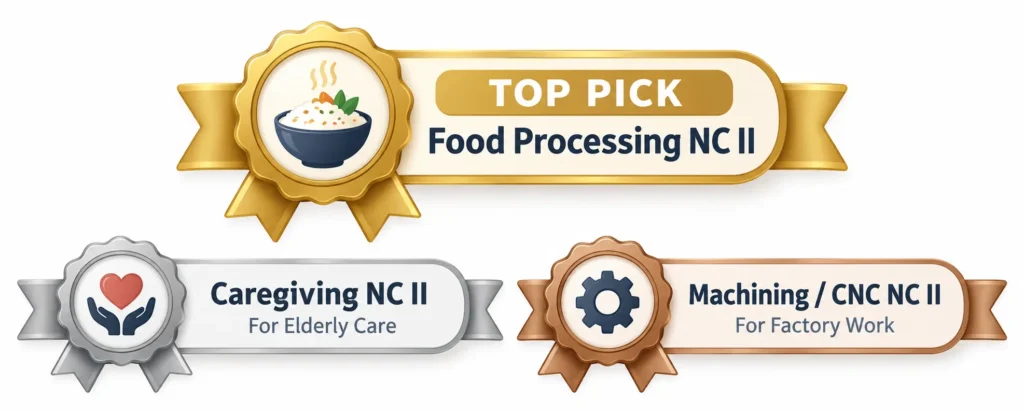
Pero walang iisang “best NC” para sa lahat. Caregiving NC II ang mas bagay kung elderly care ang target mo, habang Machining NC II or CNC Machine Operation NC II naman para sa factory at precision-manufacturing jobs. Piliin ang NC na tugma sa Japanese job at SSW skills test na balak mong kunin.
Important Note: Ang TESDA NC ay proof lang ng skills mo sa Pilipinas. Para sa SSW I, karamihan ng applicants ay kailangan pa ring pumasa sa required skills test at Japanese-language test. Maaaring exempted ang nakatapos ng Technical Intern Training II, pero kailangan pa rin ng skills test kung lilipat sa ibang field.
References for This Section:
- Immigration Services Agency of Japan — SSW 1 Manufacture of Food and Beverages Field
- Immigration Services Agency of Japan — Specified Skilled Worker Program
Quick Ranking
| Rank | Recommended TESDA qualification | Best-matched Japan field | Japan’s official five-year acceptance ceiling | Main reason for the rank |
|---|---|---|---|---|
| 1 | Food Processing NC II | Food and beverage manufacturing | 139,000 | Tugma ang skills, malaki ang intake, madaling pasukan, at may SSW II pathway |
| 2 | Caregiving NC II | Nursing care | 135,000 | Malaki ang intake at may JPEPA option para sa qualified applicants |
| 3 | Machining NC II or CNC Milling/Lathe Machine Operation NC II | Industrial product manufacturing | 173,300 | Pinakamalaki ang intake at may magandang long-term technical career path |
| 4 | Agricultural Crops Production NC II or the relevant Animal Production NC II | Agriculture | 78,000 | Tugma sa crop or livestock work at malinaw ang SSW test route |
| 5 | Manual Metal Arc Welding NC II, GMAW NC II, or FCAW NC II | Shipbuilding, construction, or industrial manufacturing | 36,000 shipbuilding; 80,000 construction | Useful ang welding skills, pero depende sa actual job kung anong Japan pathway ang tama |
| 6 | Carpentry NC II, Masonry NC II, Plumbing NC II, or EIM NC II | Construction | 80,000 | Magandang match kung pareho ang construction work sa NC at Japanese job order |
| 7 | Automotive Servicing specializations NC II | Automobile repair and maintenance | 10,000 | Malapit ang skills sa actual job, pero mas kaunti ang available slots |
| 8 | Housekeeping NC II | Accommodation or building cleaning | 23,000 accommodation; 37,000 building cleaning | Useful para sa service work, pero may hiwalay na skills test sa bawat field |
| 9 | Current Aquaculture NC II specialization or Fish Capture NC II | Fishery and aquaculture | 17,000 | Tugma sa fishery at aquaculture, pero mas kaunti ang slots at depende sa location ang trabaho |
| 10 | Driving (Articulated Vehicle) NC III | Automobile transportation | 24,500 | May legal pathway, pero challenging dahil sa Japanese license at mas mataas na language requirement |
Not a top choice for now: Cookery NC II. Tugma ito sa Japan’s food-service work, pero suspended ang new SSW certificate-of-eligibility issuance for this field starting April 13, 2026 dahil expected nang maabot ang intake limit.
Mas mabuting hintayin muna ang official reopening notice bago mag-enroll, instead na umasa sa old job ads.
Tip from the author: Kapag may dalawang NC na bagay sa target job mo, i-compare ang competencies ng bawat isa bago pumili. Piliin iyong mas direct ang match sa actual work sa Japan.
How Was the Ranking Calculated?
Bawat pathway ay ni-rank gamit ang limang factors:
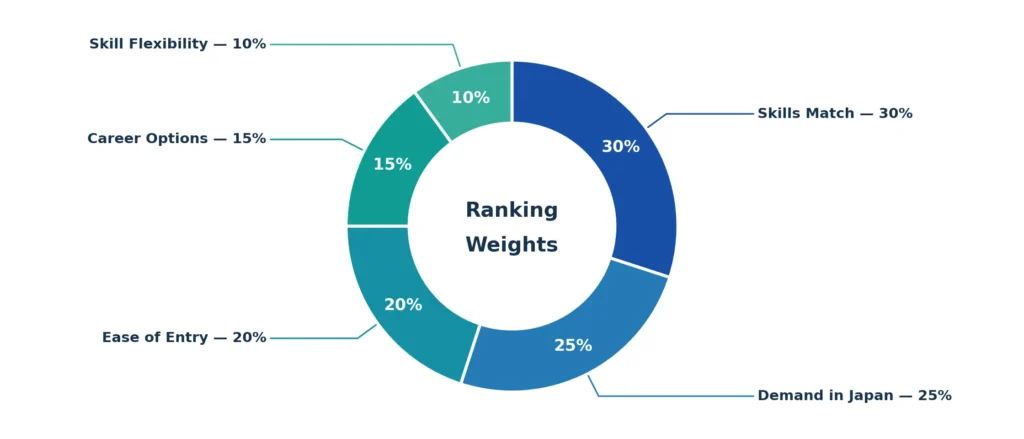
- Skills match, 30% — Gaano kalapit ang TESDA skills sa actual work sa Japan.
- Demand in Japan, 25% — Based sa approved worker limit ng Japan from April 2024 to March 2029. Hindi ibig sabihin na lahat ng slots ay open ngayon.
- Ease of entry, 20% — Kasama rito ang language, license, degree, experience, at required tests.
- Career options, 15% — Kung may SSW II o ibang legal way para makapagtrabaho nang mas matagal sa Japan.
- Skill flexibility, 10% — Kung magagamit ang skills sa ibang employers, industries, o countries.
Ang ranking ay based sa career pathway, hindi sa salary. Walang guaranteed salary sa Japan para sa isang specific TESDA NC.
References for This Section:
- Immigration Services Agency of Japan — SSW fields and program features
- Immigration Services Agency of Japan — SSW proficiency tests
- TESDA — Assessment and Certification
Read the full official SSW field guide here: Specified Skilled Worker fields
Why Is Food Processing NC II the Best Overall Choice
Food Processing NC II ang isa sa pinaka-practical na choices para sa Japan dahil tugma ang skills nito sa trabaho, mataas ang demand, at manageable ang requirements.
Sa TESDA, tinuturuan ang trainees ng food processing, sanitation, good manufacturing practices, HACCP, packing, production-line work, at quality checks. Sa Japan, kasama sa related SSW field ang food and beverage manufacturing, processing, at workplace safety.
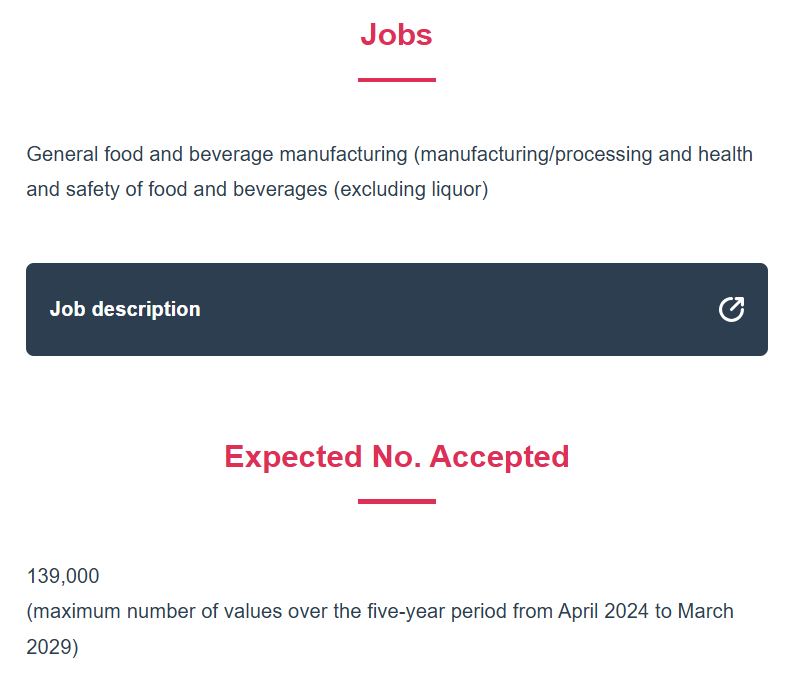
May acceptance ceiling na 139,000 workers mula April 2024 hanggang March 2029 para sa field na ito. Kadalasan, kailangan pumasa sa Food and Beverage Manufacturing SSW skills test at sa JFT-Basic o JLPT N4 or higher.
What Jobs Can It Lead To?
Depende pa rin ang actual job sa approved work description sa Japan, pero puwedeng kabilang ang:
- Food production worker
- Food processing worker
- Packing or packaging staff
- Production-line staff
- Basic quality-control work
- Sanitation and food-safety work
Sa Food Processing NC II, tinuturuan ang trainees ng salting, curing, smoking, fermentation, pickling, drying, food processing, packing, sanitation, at basic equipment use. Mas malawak ang sakop ng Japan’s SSW field, kaya kailangan pa ring pumasa sa required Japanese skills test.
What Are the Limits?
- Hindi automatic na magiging SSW ka dahil lang may Food Processing NC II ka.
- Hindi nito sakop ang lahat ng factory work sa Japan.
- Kailangan mo pa ring pumasa sa Japanese skills test at ma-match sa actual job.
- May employers na humihingi ng production experience, kahit walang fixed experience period na required sa immigration rules.
Can This Become a Long-Term Career?
Yes. Ang food and beverage manufacturing ay covered ng SSW II.
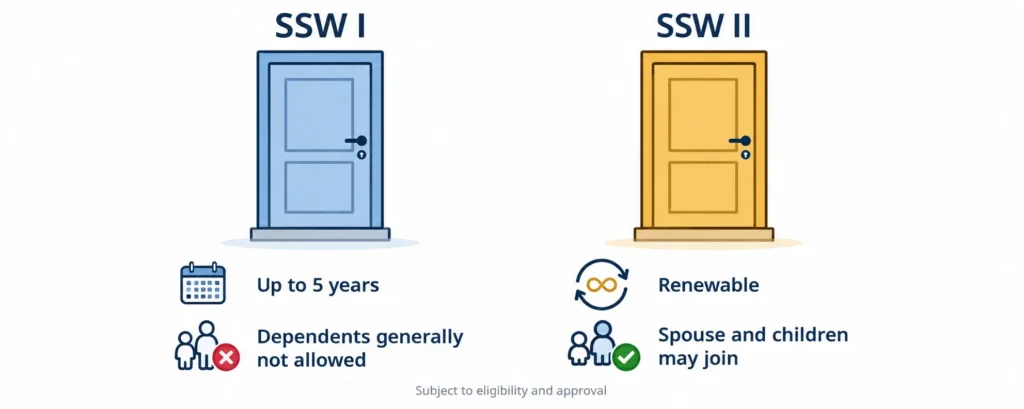
Sa SSW I, puwedeng mag-work sa Japan for up to five years total, pero generally hindi puwedeng isama ang family. Sa SSW II, puwedeng mag-stay nang mas matagal as long as renewed ang status, at puwedeng isama ang spouse at children kapag na-meet ang requirements.
References for This Section:
- Japan SSW — Food and Beverage Manufacturing Field
- TESDA Training Regulations — Food Processing NC II
- Japan Ministry of Foreign Affairs — SSW overview
Read the full official TESDA document here: Food Processing NC II Training Regulations
Why Does Caregiving NC II Rank Second
Caregiving NC II is a strong choice para sa applicants na gustong magtrabaho sa elderly care, pero mas mataas ang language at emotional demands nito kaysa sa ibang pathways.
Related ito sa Japan’s SSW nursing-care field, na may acceptance ceiling na 135,000 workers over five years. Maaari rin itong makatulong sa applicants under the Japan–Philippines Economic Partnership Agreement or JPEPA.
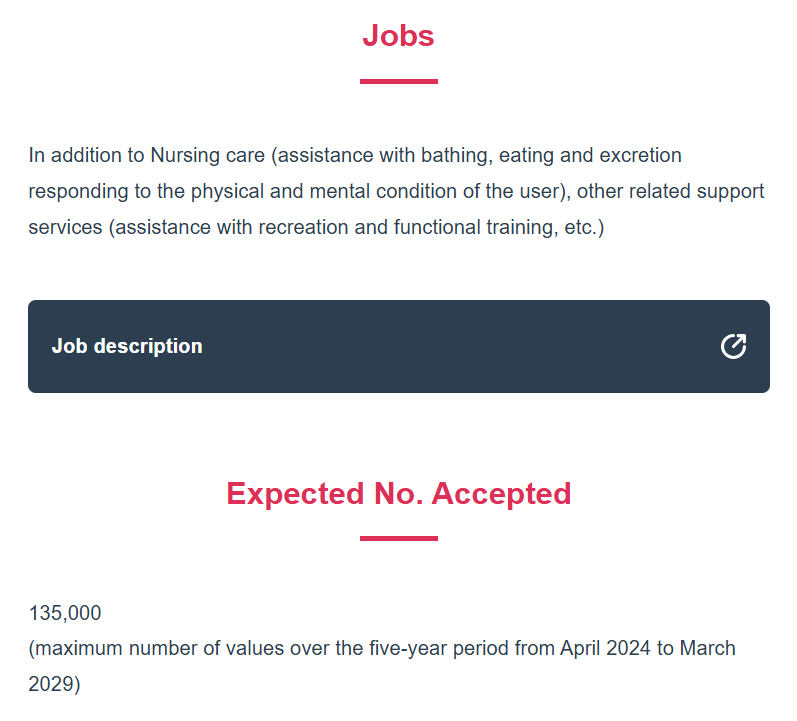
Sa TESDA, kasama sa training ang pag-aalaga sa elderly at persons with special needs. Sa Japan, puwedeng kabilang sa nursing-care work ang pagtulong sa bathing, eating, toilet needs, recreation, at basic physical support.
What Tests Are Required Under SSW Nursing Care?
Most new applicants need to pass three tests:
- Nursing Care Skills Evaluation Test
- JFT-Basic or JLPT N4 or higher
- Nursing Care Japanese Language Evaluation Test
Ibig sabihin, hindi ito ang easiest route kung basic Japanese lang ang kaya mo. Mas mataas ang language requirement dahil kailangan mong makipag-usap nang maayos sa elderly clients at care staff.
How Is the JPEPA Route Different?
Ang JPEPA ay hiwalay na government-to-government pathway na handled ng DMW at Japan’s JICWELS. Sa 2026 call, may 50 nurse at 300 certified-careworker positions, kasama ang free Japanese-language training sa Pilipinas at Japan, plus living allowance habang nagte-training.
For the 2026 JPEPA call:
- BS Nursing graduates could apply as careworkers, with or without a PRC license.
- Graduates ng ibang four-year course needed a valid Caregiving NC II.
- Nurse applicants needed a BS Nursing degree, active PRC license, at least three years of work experience sa hospital, clinic, o health centre.
Closed na ang 2026 application period. Ipinapakita ng requirements na recognized ang Caregiving NC II sa JPEPA employment pathway, pero hindi ibig sabihin na open pa ang hiring ngayon. Puwede ring magbago ang requirements sa future batches.
Can a Caregiver Stay Longer Than Five Years?
Hindi kasama ang nursing care sa SSW II dahil may hiwalay na residence status ang Japan para sa certified care workers.
Sa JPEPA, hinihikayat ang candidates na pumasa sa Japan’s national certified-careworker exam. Kapag pumasa, maaari silang magkaroon ng pathway para makapagtrabaho nang mas matagal sa Japan under the proper residence status.
Who Should Not Choose This NC?
Huwag piliin ang Caregiving NC II dahil lang “in demand” ito.
Kasama sa trabaho ang personal care, physical assistance, documentation, shift work, at regular na pakikipag-usap sa clients. Kailangan din ng good Japanese communication dahil ang maling instructions o misunderstanding ay puwedeng makaapekto sa health, comfort, at safety ng inaalagaan.
References for This Section:
- Japan SSW — Nursing Care Field
- TESDA Training Regulations — Caregiving NC II
- Embassy of Japan in the Philippines — 2026 JPEPA call
- DMW — 2026 JPEPA recruitment specification
Read the full 2026 official announcement here: JPEPA Nurse and Certified Careworker Candidates
Susunod na Hakbang
Kung Japan ang target mo, piliin muna ang specific job o SSW field na gusto mong pasukan, then use our career guide to choose the TESDA NC that matches your target job.
Kapag may napili ka nang NC, check the required SSW skills test at Japanese-language requirement, then start preparing for the Japan application process.
Tandaan, ang TESDA NC ay proof of competency, pero hindi ito automatic qualification for SSW.
